
The Buurtzorg Revolution
We are a revolutionary organisation that inspires globally.
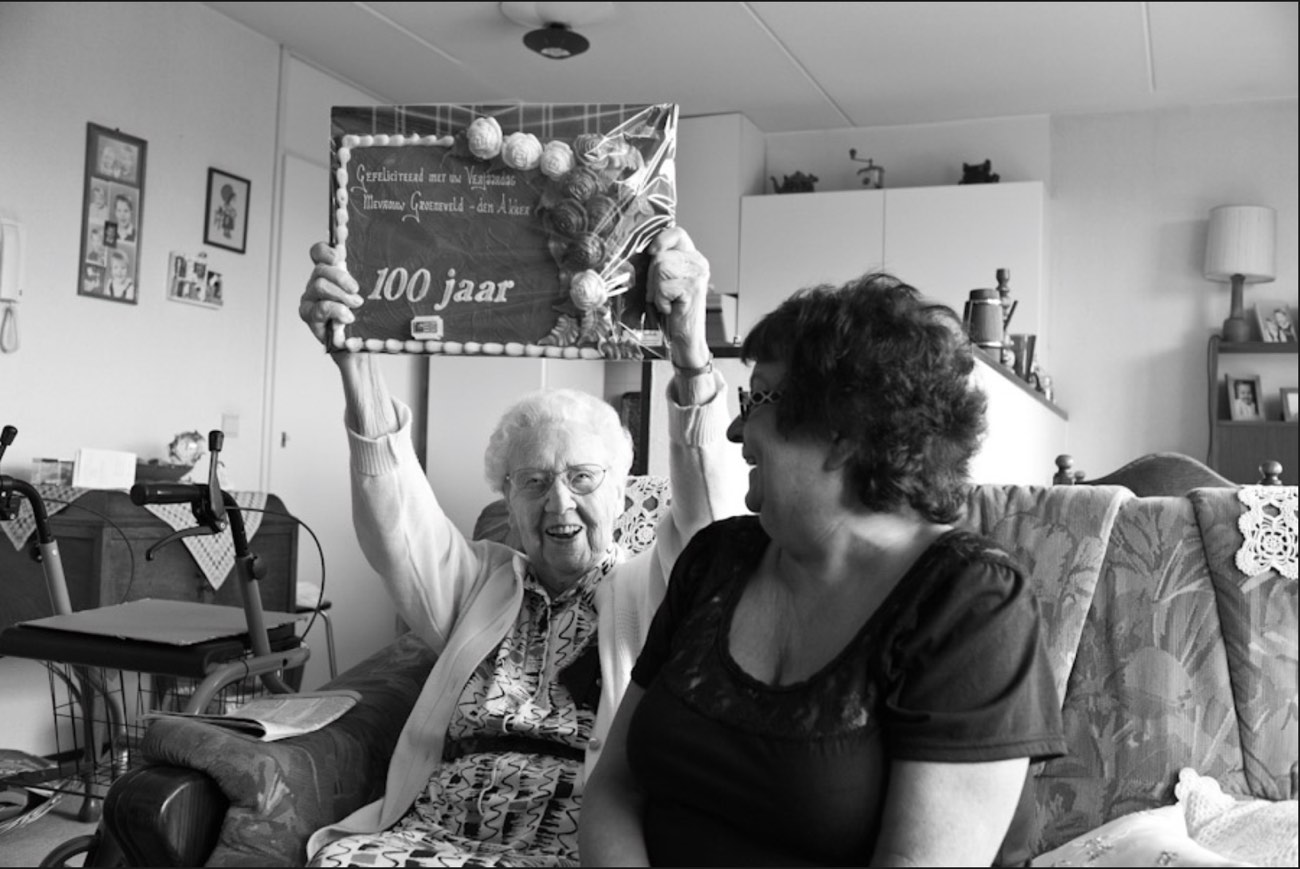
“We started working with different countries and discovered that the problems are the same. The message every time is to start from the client perspective and simplify the systems.”
A new way of organising
Buurtzorg was founded in 2006 with a client-centered neighborhood model that revolutionised care in the Netherlands and came to be seen as a premier example of how to organise for the next paradigm we are entering.
Buurtzorg scaled very quickly across the Netherlands in the first several years. During this time Buurtzorg evolved into mental health, domestic care, youth care, recovery/rehabilitation care, hospice and maternity care. We also supported other Dutch care organisations to integrate the Buurtzorg model of care.
Client satisfaction rates are the highest of any healthcare organisation. Staff commitment and contentedness is reflected in Buurtzorg's title of Best Employer (4 out of 5 years).
Significant financial results are also one of the outcomes. Ernst & Young documented savings of 40 percent to the Dutch health care system, and a KPMG Case Study in 2012 found:
"The model asks highly skilled nurses to deliver all the care that patients need. And while this has meant higher costs per hour, the results have been fewer hours in total. Indeed, by changing the model of care, Buurtzorg has accomplished a 50 percent reduction in hours of care, improved quality, and raised work satisfaction for employees."
The model has been recognised well beyond the Netherlands. In 2014 the Royal Society of Arts in London awarded Jos de Blok its Albert Medal for “a transformational new model of community health care”.
Inspiring around the world.
Collaboration is a foundation of Buurtzorg's operating model. Naturally, we have continued working with others globally who are looking for new ways of organizing.
The history of Buurtzorg
From one small team of nurses in 2006 to more than 14,000 professionals today.
Buurtzorg Nederland was founded in 2006 by Jos de Blok and a small team of professional nurses in response to years of ‘reform’ that undermined their ability to provide care based on a trusting relationship. The ethical commitments that had attracted them to the profession in the first place were compromised. Based on his experience as a community nurse, Jos de Blok designed an organisation that was a solution to the health care system's problems. Jos's colleagues joined Buurtzorg so that they could care for people in the way their craft demands.
Buurtzorg also wanted to simplify the health care system by demonstrating that with a patient-centred way of working that is focused on self-support and independence, the hours of care are reduced, client satisfaction is increased, employees are fulfilled with their work, and overhead and bureaucracy are decreased.
"I believe in client-centred care, with nursing that is independent and collaborative," said Jos de Blok, Director and CEO, Buurtzorg Nederland. "The community-based nurse should have a central role—after all they know best how they can support specific circumstances for the client."
Buurtzorg's empowering approach for nurses and clients proved popular with both; and as client demand grew, new Buurtzorg teams were established. In the first ten years Buurtzorg grew to over 10,000 nurses, in 850 teams in towns and villages all over the Netherlands. The Buurtzorg 'model' has become known world-wide and stands as a premier example of how any organisation can decentralise, grow, and create a work space for humanity above bureaucracy.
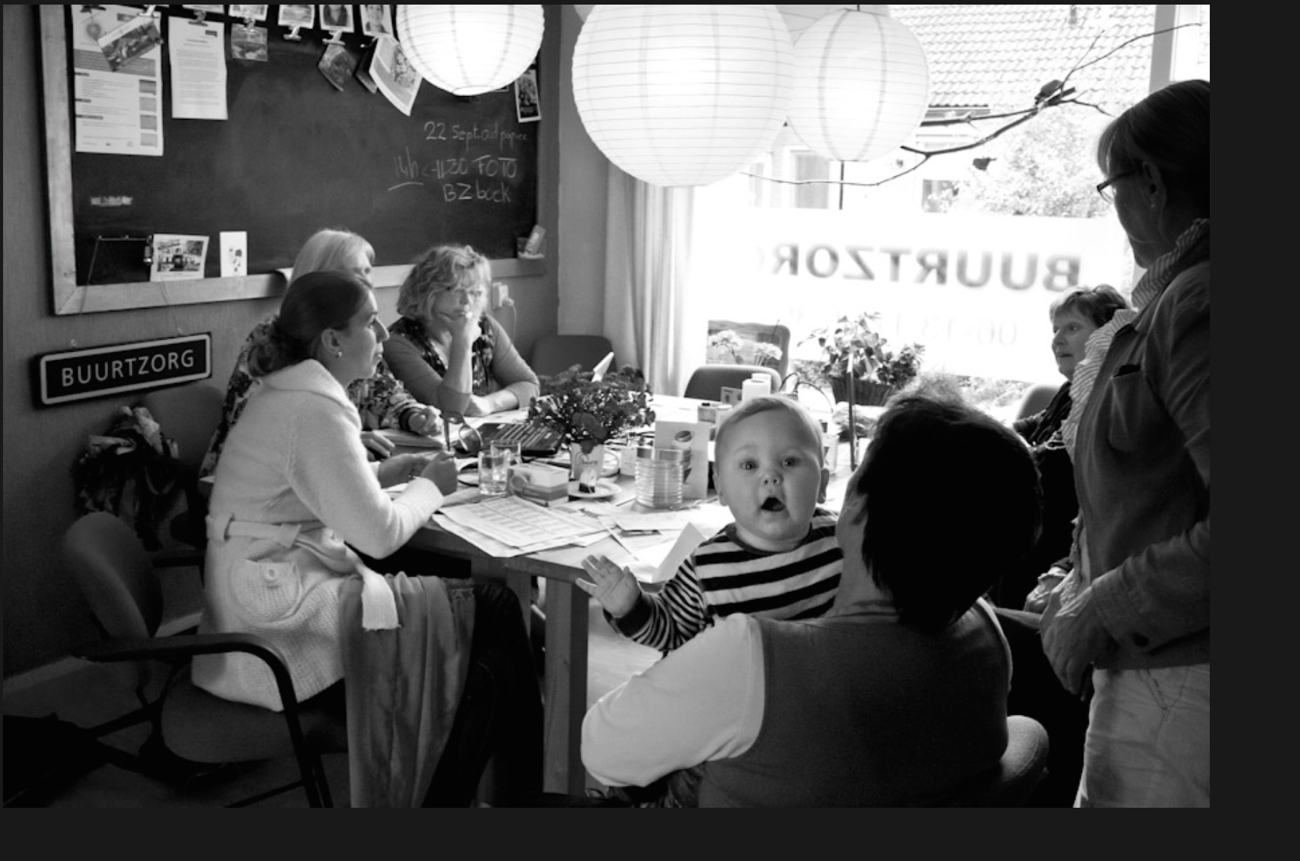
Care based on relationship
The Buurtzorg onion model starts from the client perspective and works outwards to assemble solutions that bring independence and improved quality of life.

Self-managing client
The onion model assembles the building blocks for independence based on universal human values:
- People want control over their own lives for as long as possible
- People strive to maintain or improve their own quality of life
- People seek social interaction
- People seek ‘warm’ relationships with others.
The professional attunes to the client and their context, taking into account the living environment, the people around the client, a partner or relative at home, and on into the client’s informal network; their friends, family, neighbors and clubs as well as professionals already known to the client in their formal network.
In this way the professional seeks to build a solution involving the client and their formal and informal networks. Self-management, continuity, building trusting relationships, and building networks in the neighborhood are all important and logical principles for the teams.
Self-managing teams
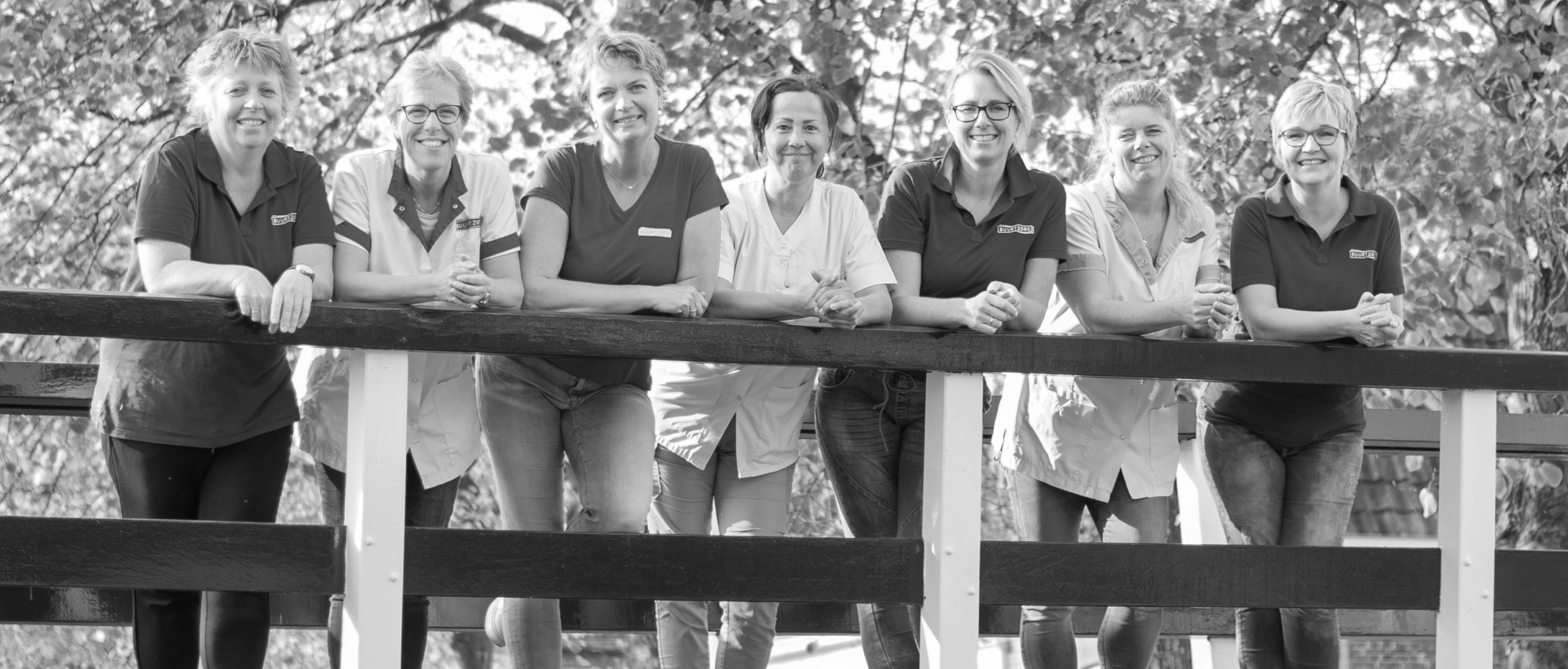
Self-managing teams have professional freedom and responsibility. A team of 12 work in a neighborhood, taking care of people needing support as well as managing the team's functions. A new team will find its own office in the neighborhood, spend time introducing themselves to the local community and getting to know GPs and therapists and other professionals and through word of mouth and referrals the team builds-up a caseload. The teams decide how they organise their work, share responsibilities and make decisions based on consensus.
Buurtzorg teams are entrepreneurial in spirit, continually improving the organisation and services. Often, Buurtzorg nursing innovations come from one person or a team having an idea and the freedom to try something new. For example, Buurtzorg has an annual national Walker-race - started by one team and their clients organising a neighborhood walker-race - and the idea has now spread across the Buurtzorg community of 10,000 nurses.
Interested in working the Buurtzorg way?
Let's talk about how we can cooperate instead of compete. We welcome ideas about what we can do together.
Start a conversation